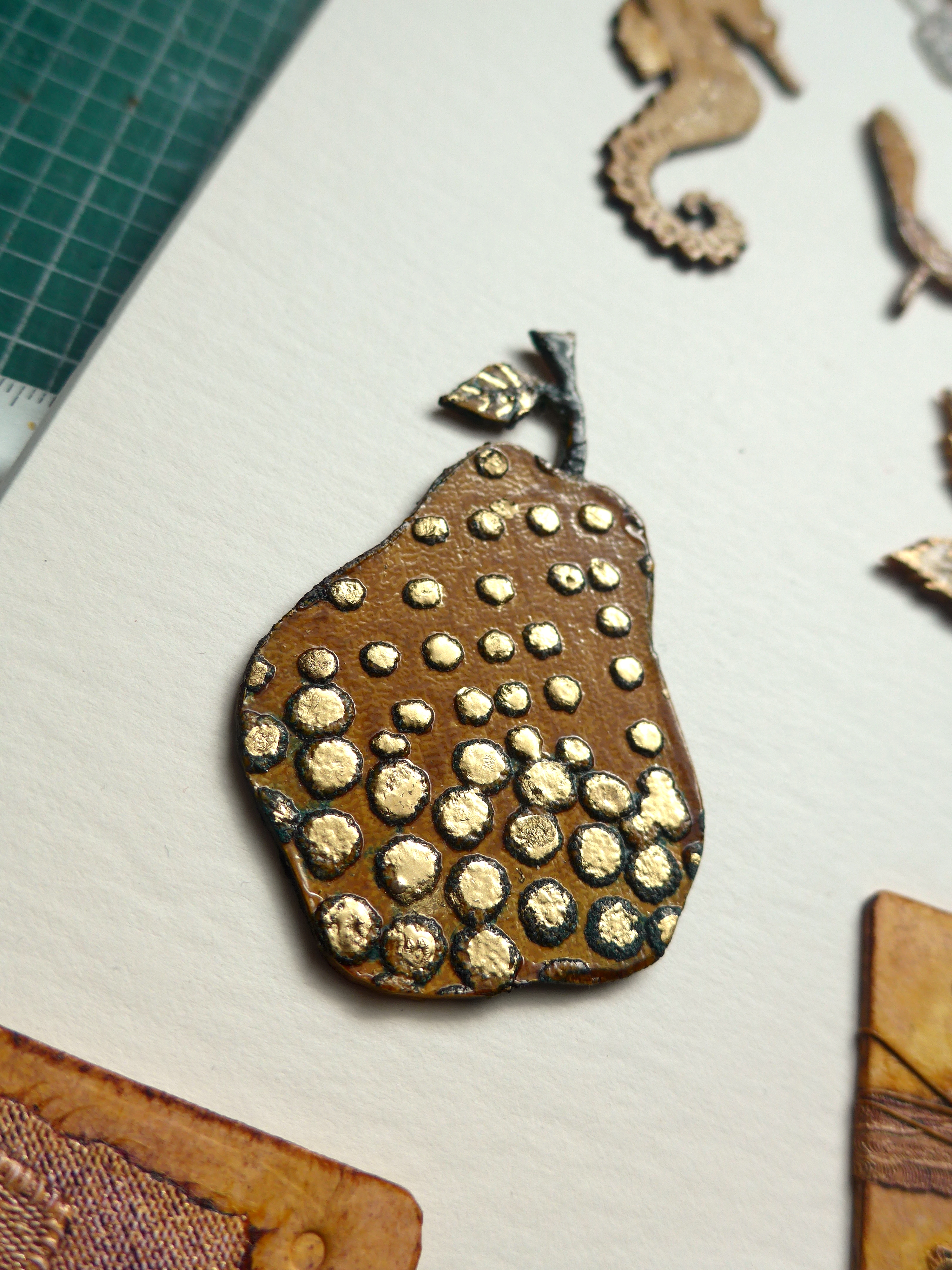
I started this little piece using some sturdy packaging left from Christmas! The miniature artworks are made the same way a collagraph plate using a variety of materials sealed onto a mountboard backing with the addition of gold liquid leaf.
Now available from my shop just click the link for more details.
It is so difficult to photograph gold and textural art and convey it’s lustrous detail in a snapshot. But it has to be done!
I am focusing here on mini plates, I like their individual quality as object and am trying to figure out how to use them as pieces of art in themselves.
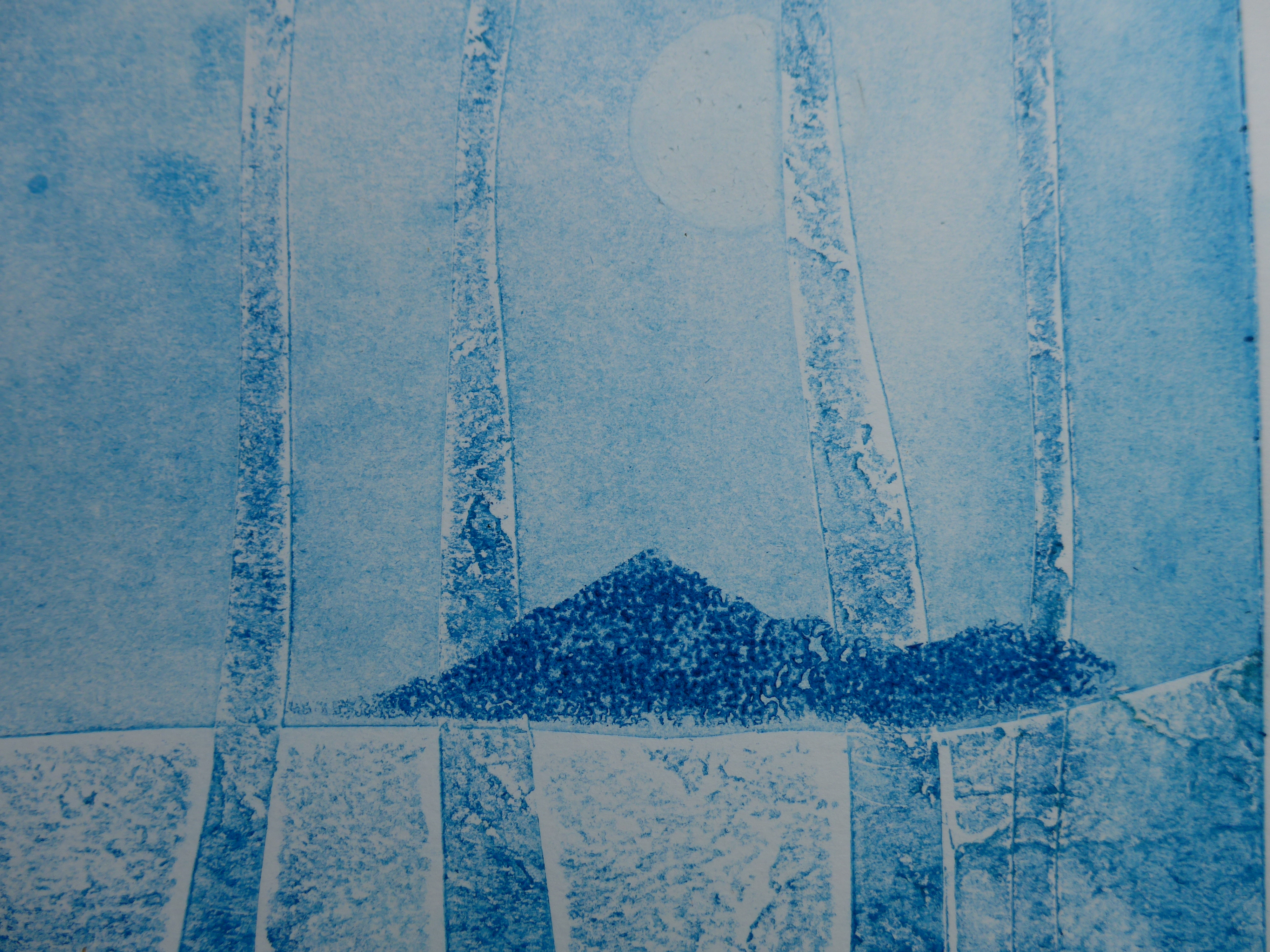
Sundarbans is a delta where hundreds of rivers meet the Bay of Bengal represented by the wavy vertical lines of this artwork. This original collagraph is hand pulled onto Somerset Velvet 300gsm paper using Cranfield inks with watercolour detail.
Taking on a new technique can be good move for exploration, experimentation and rejuvenating creative energy! I really did need a change at the end of 2019 as I had ground to pretty much a halt. Collagraph printmaking is a completely different approach to painting and so now I have two very distinctive styles; painting up until 2019 and printmaking for 2020 and ongoing. Today my work is more textural, incorporating different techniques including monoprinting using dried leaves with nature continuing to be my inspiration.
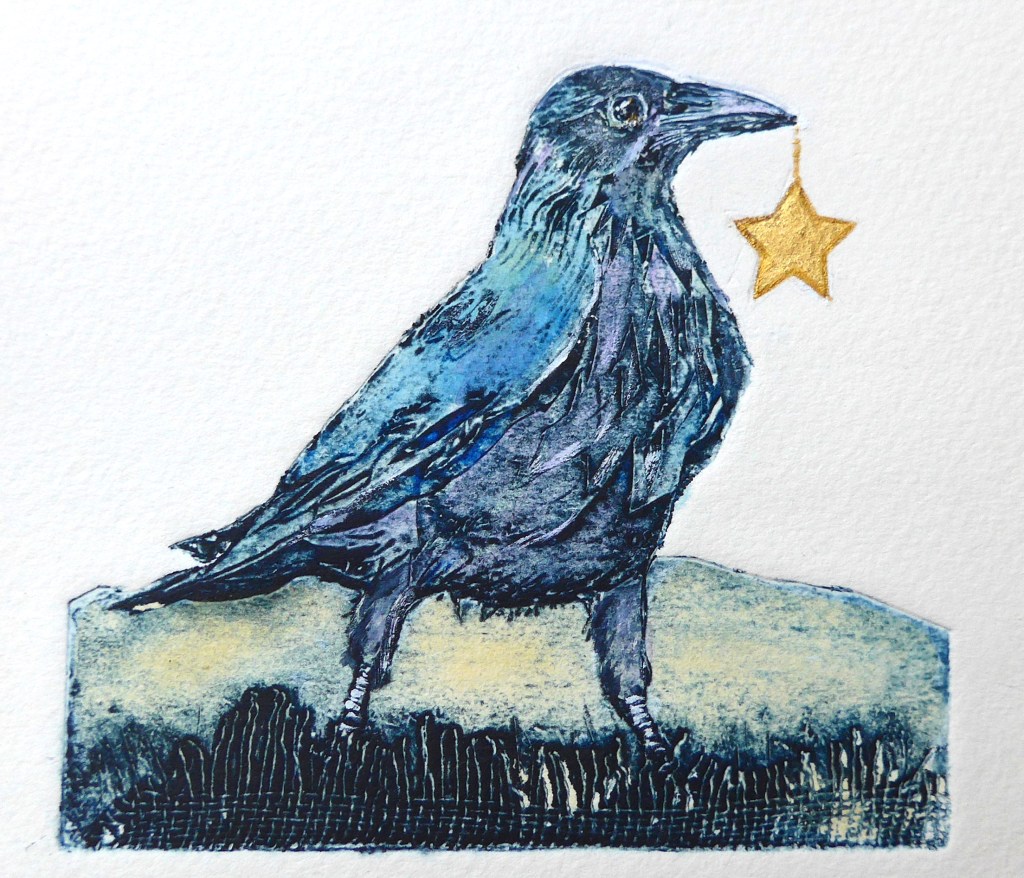
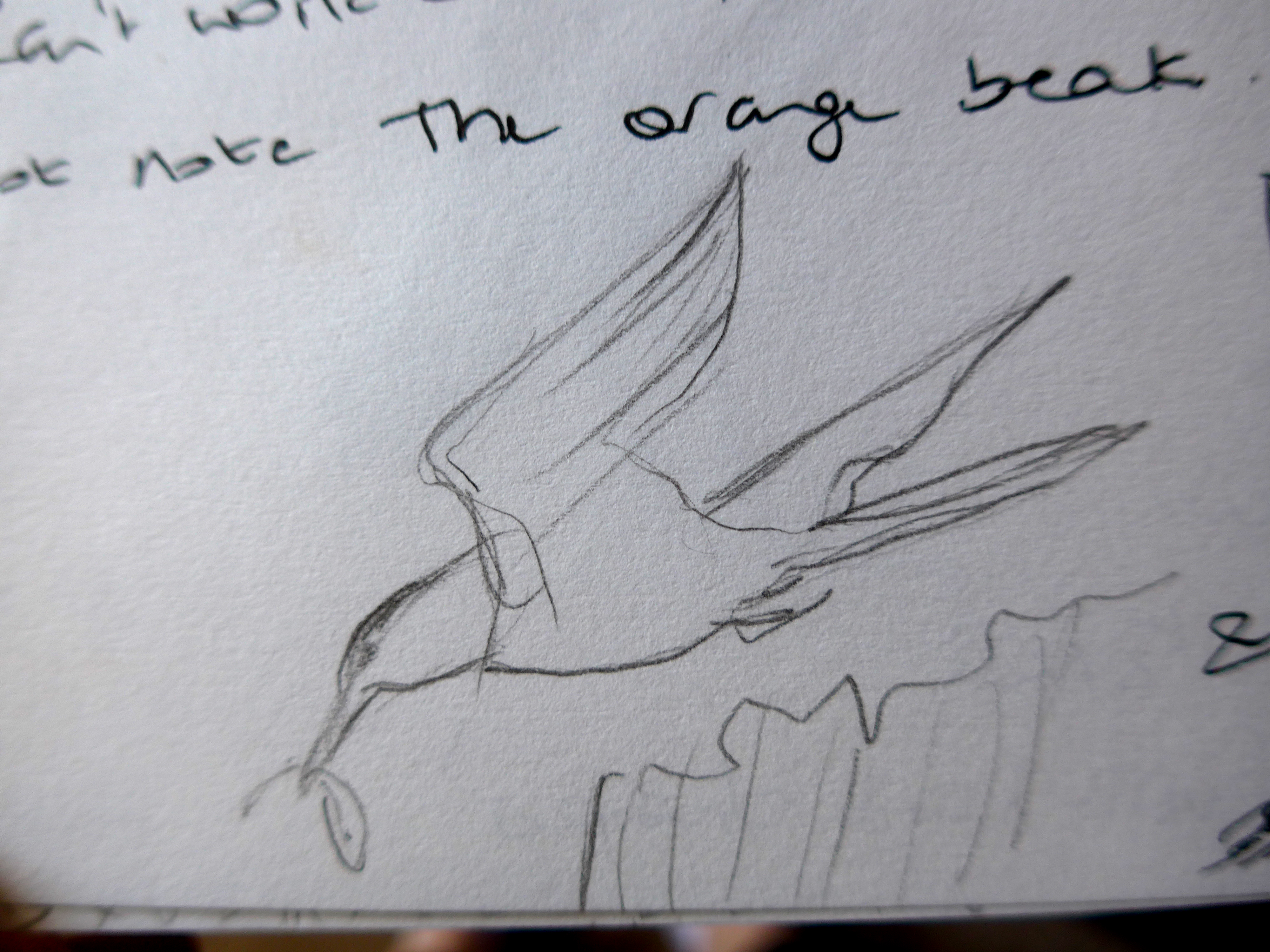
The Kite below was printed using a mountboard collagraph plate, the leaves are monoprints added after the paper has dried and the bird has a little burnt sienna and yellow watercolour also reflected in small detail on the leaves.
So many ideas and so little time! I mean lots of people have ideas and don’t necessarily go with any of them at all, but one of the difficulties of knowing that you are going to create something is ruling out all those amazing ideas other than the one you choose to run with.
I am not suggesting that any idea will turn out well, but the more you that try the higher your success rate, and a lot of attempts end up in the bin along the way!
Also theoretically it is a good idea to go with a theme. Choose an idea and beat it to death, until you run out of steam. All those mistakes and all those gains made with something intentional in mind.
Since this is all theory let me show you some practice! OOPs I have to reveal that I haven’t followed my own advice at all!
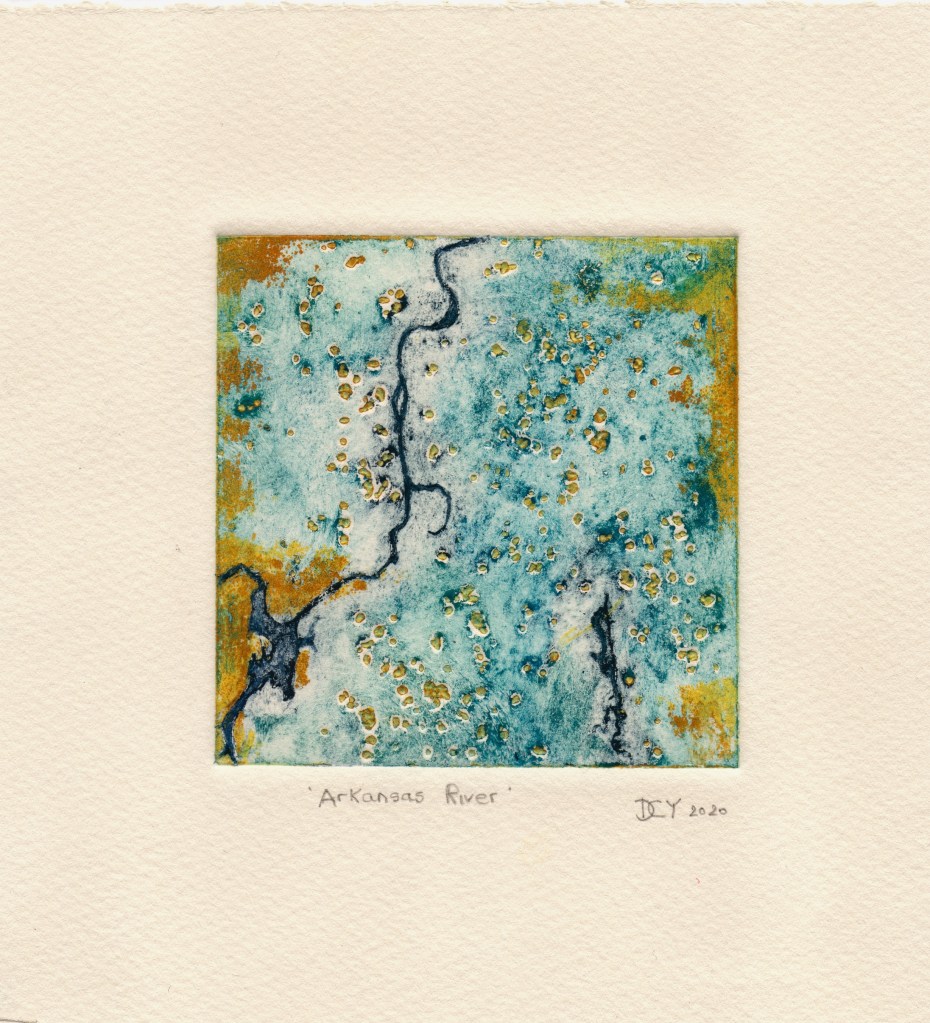
I am inclined to representative work, I love making images of animals and birds. But then I can get a momentarily distracted by other ideas I am interested in too and head off in a different direction. I really would like to do a series based on images produced by NASA earth observatory. They have this amazing website of beautiful images from space being continually updated. I am as fascinated by these as I am fascinated by drone imagery of our coastline here in the UK; seeing the landscape from above and then understanding it from the ground is really interesting to me.
The work below is the Arkansas River from space. This sort of work moves me toward the abstract and helps me exercise less restraint on my colour combinations.
This is a new collagraph plate, it has driven me a bit mad translating the carved lines from my photo in Randwick Woods in Gloucestershire. Now the varnish must dry.
Yesterday I was watching a Brian Cox programme about the discovery of treatments for diseases; catching up on things recorded last summer! Brian Cox was describing how these days our investment in research is focused only on the cure or solution to the problem, ie discarding any negative results as irrelevant. The unfortunate problem with this is that scientists and researchers are not being given free rein to discover things by accident when inadvertent discoveries can also lead to the creation of useful results.
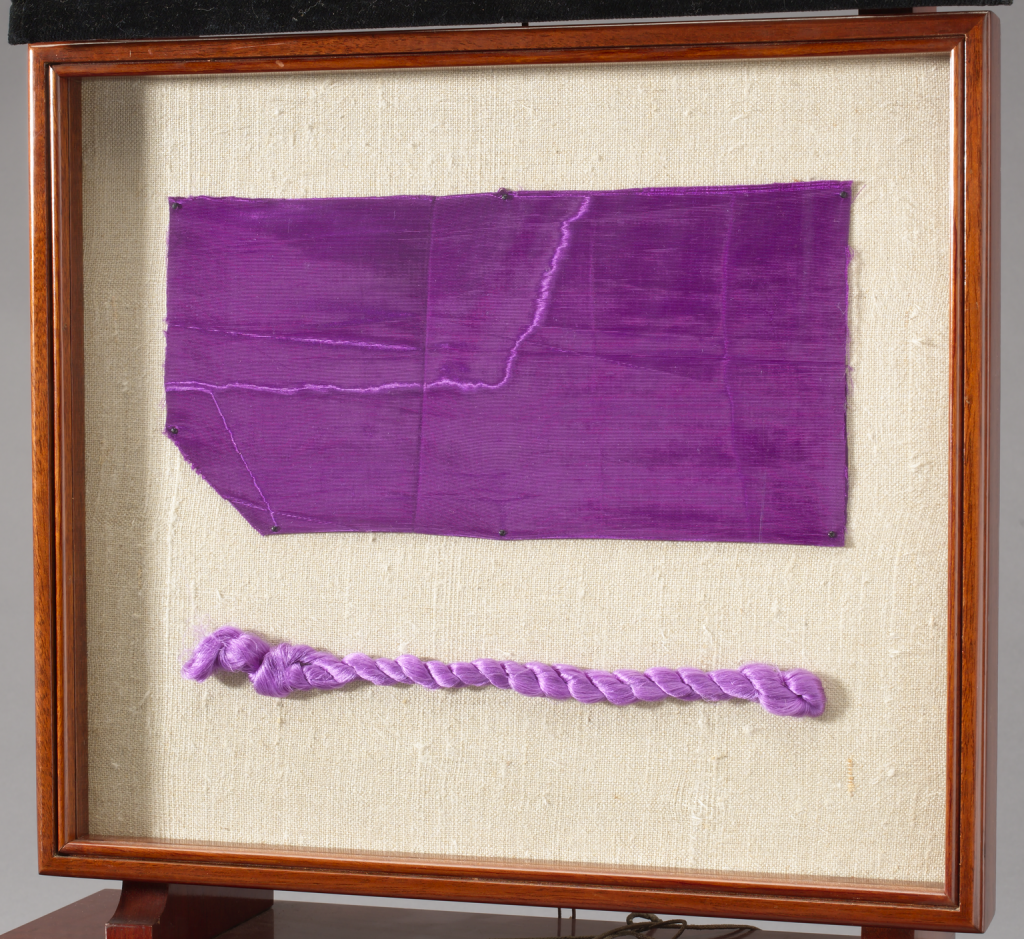
The permanent dye for the colour mauve was accidentally discovered by a scientist (William Henry Perkin) who was trying to create a synthetic quinine which is a cure for malaria. He made his future wealth out of producing this dye particularly after Queen Victoria wore a silk gown dyed with his creation mauveine. He failed in his original task, yet this discovery was deemed to be a success!
Essentially, both successes and also the detailed records of failures can be of great use to other research in the future.
The same could be applied to artistic endeavours couldn’t they?
I do divide my failures into those which are possibly useful to refer to in the future and rubbish definitely to be binned! It just would not be possible for me to store everything especially since switching from painting to printmaking. Photos of work in progress and experimentation can make it easier to store information, or even just notes.
I hung onto this trio of tom cats below which was created simply to test a printmaking texture. It was useful yesterday in convincing me to use a particular texture for some mountains on a new piece I am working on at the moment.
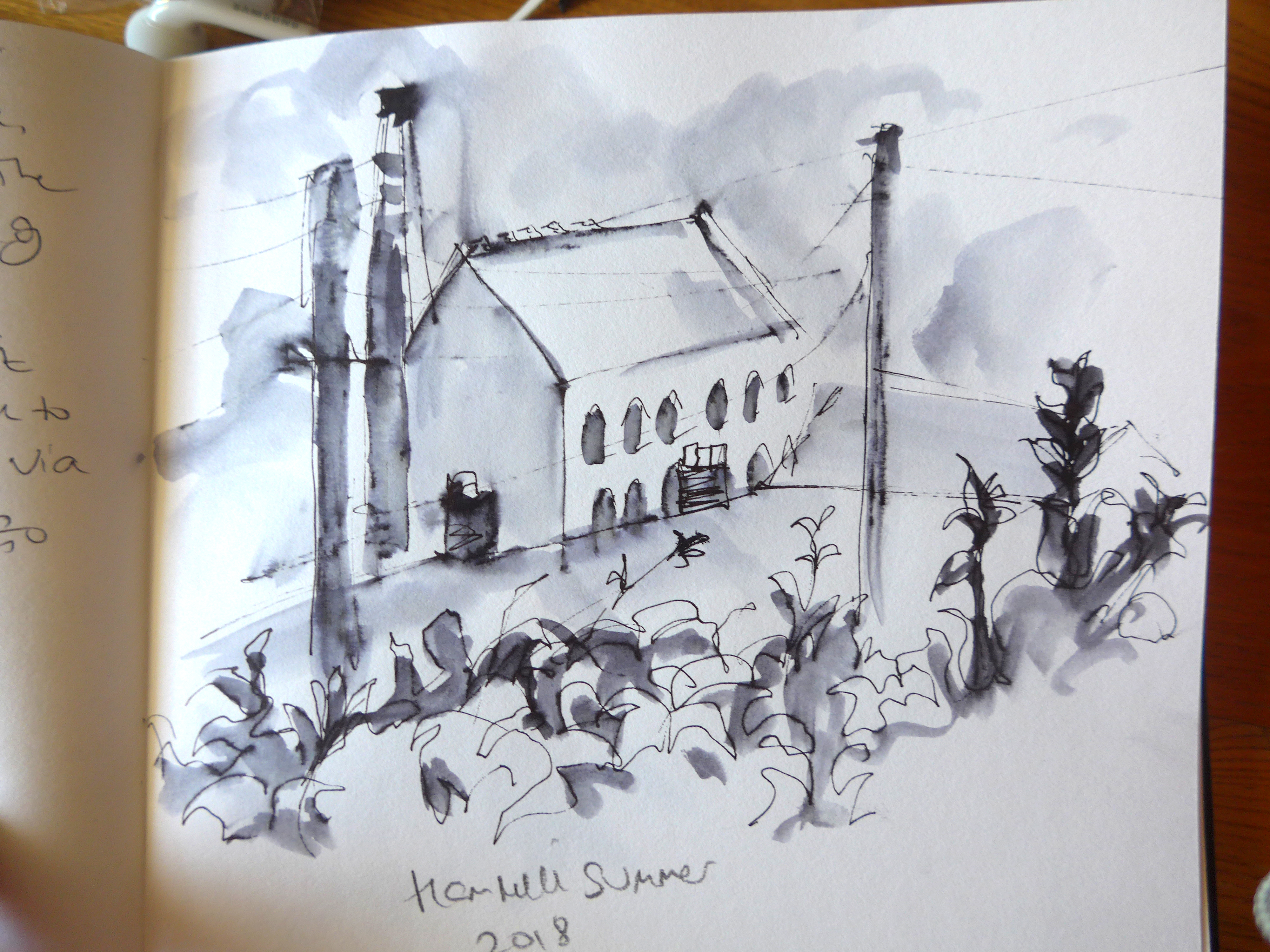
These are prep sketches for a commission and a practice painting of a Weimeraner using the example from a Youtube video. There is plenty of good inspiration on Youtube!














 Diane Young Artist