Happy Easter weekend! Sometimes it is better just to go for it and create a small piece of art especially if you are procrastinating a bit, so here is my funny little egg print.
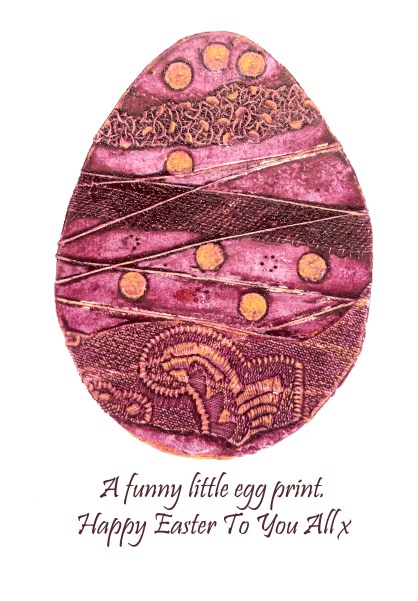
Happy Easter weekend! Sometimes it is better just to go for it and create a small piece of art especially if you are procrastinating a bit, so here is my funny little egg print.
My walk today was bright and dry and full of birdsong. The usual suspects showed up robins, blackbird, blue and coal tits.
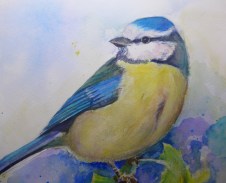
Blue Tit – © Diane Young
Along with crows and wood pigeon, and a crow’s encounter with a low flying buzzard dipping sideways to shake the crow off his tail. Our local canal has a resident heron who is very used to people walking the tow path; he continued his fishing activities unfazed in this morning’s sunshine.
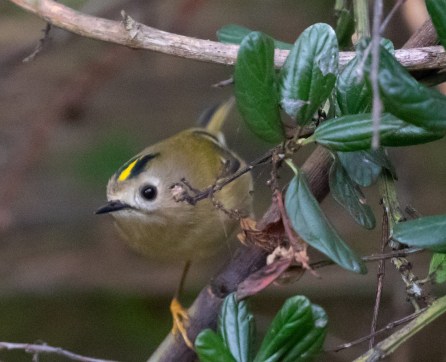
One of my favourite bird calls is that of the Goldcrest. They are very small, our smallest european bird, and usually situated very high up in conifer trees. You might see them from below if you are lucky, but then only their olive coloured underside, and unless you learn their call you would not know that they were there at all. Their call is high pitched, jingling sound, listen here to find out what it sounds like…..
https://www.british-birdsongs.uk/goldcrest/
The goldcrest is a tiny cute little bird that looks slightly glum don’t you think?
This House Sparrow is having a bit of a crisis. He has been bringing nesting material to this door for many weeks now even though we have tried blocking his reflection with paper on the outside it has not stopped. Interestingly the next door neighbours think it is “their” sparrow, as it is trying to get into their house too.

The House Sparrow is an adaptable bird and had been extremely successful in urban settings with flocks of them living side by side with humans up until the 1970’s. Now House Sparrows may be in real crisis as a successful breeding urban bird that has now all but disappeared from our towns and cities.
“The State of the UK’s Birds in 1999 showed house sparrow numbers had fallen 58 per cent between 1975, when they were first monitored, and 1998 …. the BTO’s breeding birds survey.” The Independent 2000.
It seems though that the actual reason has yet to be discovered. And this is not just a problem for the House Sparrow in the UK. For example in India Delhi adopted the House sparrow as its State bird in 2012, this was after they had noticed that the House Sparrow was in severe decline…[there is more interesting reading from The Hindu 2014 here.]
This world wide decline in numbers of House Sparrows started to occur before cell phone radiation was present. It is suggested that food sources particularly around concentrated human populations have disappeared due to the extensive use use of pesticides and removal of habitat with our concrete architecture. These birds rely on small insects whilst rearing young and grains and berries the rest of the year. It has been noted that House Sparrows have moved away from humans, implying that it has to do directly with our activity in these recent decades.


What can you do to help the House Sparrow? This article gives some tips on how you can assist with the local House Sparrow population right outside your door.
A little bit of editing goes a long way – here’s my photo of a buttercup from my walk this morning whilst looking for inspiration.

The new magazine The Contender reports political articles quarterly but also includes a variety of other contributions such as this moving poem below by Imogen Broughton.

The Contender is a political magazine that is not aligned with any particular party and brings politics to you via a variety of informed writers and through different media. Artwork featured below is by editor Bradley Young
Follow him on facebook at The Contender
Purchase the 38 page A4 high quality magazine The Contender here
Available quarterly.

Shame I do not have an SLR camera, but these are not bad for my little Lumix


Claire Failes Landscape Artist

Tyndale Monument Gloucestershire painting by Claire Failes

Claire Failes’ Studio
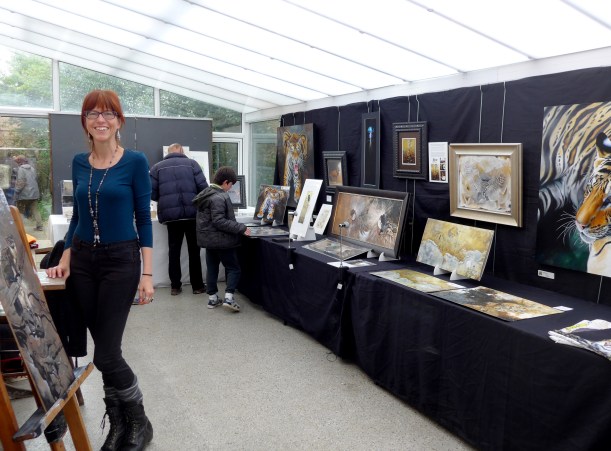
I ventured to Nature In Art to see artist in residence Claudia Hahn who is an amazing animal painter. She uses all sorts of medium alongside gold leaf and bronze pigments and travelled in India on an elephant to capture pictures of tigers for reference. I can usually resist a purchase but this time I could not walk away without taking home the print below of “Grumpy Old man”. See this Tiger print below (still in cellophane hence the highlights!). Find out more about Claudia here.

Having mainly focused on birds this year with my painting I fancied engaging more directly with my subject matter by trying out some bird watching.
Symonds Yat in Gloucestershire is known to have a successful breeding pair of Peregrine falcons.
The first reward for me was not seeing a Peregrine but instead two Nuthatches up close and snapping some half decent photos.
Luckily for me some time later I happened to have in sight the take-off point from which one of the Peregrine Falcons took to the wing and soared out across the Wye Valley below us. There was a nice atmosphere between the regular birdwatchers who enthusiastically share information. It was nice to get there early before the throng of tourists and walkers poured in nearer to lunchtime, and needless to say that is when I snuck away.
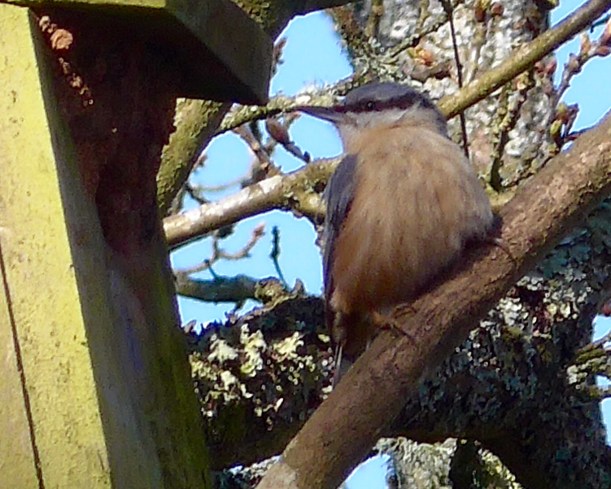

Peregrine photo below is courtesy of Pixabay images.

When it has made it to the bin? Hopefully not.
I have ready many tips on this and this one sums it up in a great way for me.
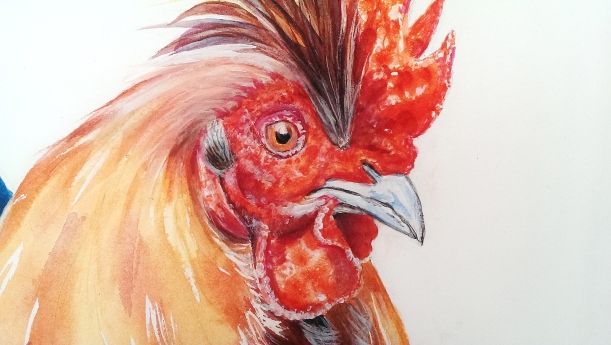
Artist Bryan Evans states in The Artist that
“…a painting is finished when it’s not as good as it just was, and is unlikely to get any better.”
Easy to say;, but hard to (cockadoodle) do!
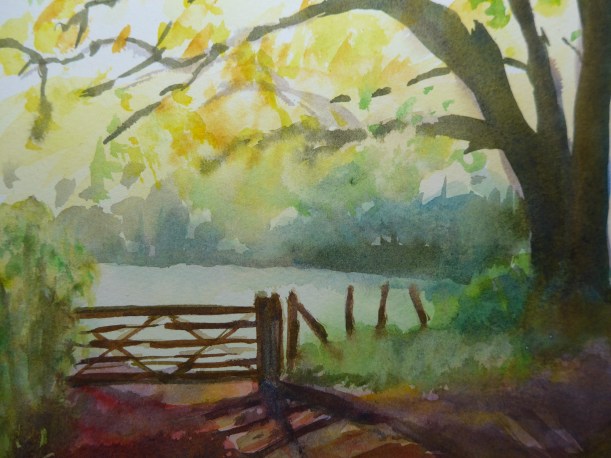
Years have passed since I painted a natural landscape and now having watched a demo by watercolour artist John Bailey at my local art club I was inspired to emulate what he had done by using the same sample photo that John used to create his painting but using my usual medium acrylic paints. It’s a good way to firmly apply the demo to memory!

Having visited Scotland last year I have seen Highland Cattle in fields in their native country, yet my own photos of Highland Cows are taken very near my home in the Cotswolds where they roam free over hundreds of acres of natural land during the summer months. Sometimes they just stand on the road and the traffic have to wait for them to move. I love that these cows are extremely docile and have characterful & steadfast faces.


A helpful way to review tonal variation in a painting is to take a black and white photo. If you are struggling with a painting and cannot quite figure out h ow to fix it a quick snapshot can point out problems in this area. My black and white photo here shows a good range of darks through to white. There was just a bit of light shadow to add to the face to finish.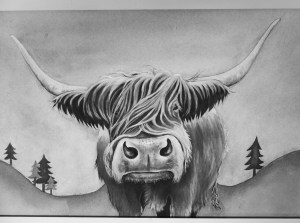
Sold! From Studio No 71 in Totnes, my Barn Owl with Stopwatch original painting with gold leaf.

Barn Owl framed
This weekend after a trip to Dartmoor we dropped in to collect some work from Studio 21 which has a great position at the bottom of the High Street. The shop is small but packed with interesting things to discover; pictures, sculptures, plates and bowls and glass and pottery and more!
Not only did we arrive on a day when a customer was about to purchase one of my original paintings, but Studio No 71 had also sold a framed Moongazing Hare print of mine during that day too.
How strange, not to have sold for quite some time, and then two in one day and when I was visiting!
It is so nice to meet the individual who likes my art enough to buy it and hang it on their wall. An image that I have formed from my imagination strikes its own chord with another person, and off it goes on its own journey, in this instance wrapped and strapped onto a bicycle!
Grateful for time with friends and walks on Dartmoor just as the season is turning and when such coincidences are a delight.
At times we get so focused on getting really good at an activity that time seems to run out for experimentation and playfulness.
I swim regularly and know that playing in the pool doing roly-polys or attempting handstands increases confidence and can stretch me out of my comfort zone. Yet on a day to day basis I only allow enough time to use the water to keep fit.
As an artist I like to create pictures that have a fair chance of being successful and that must mean following a well practiced strategy for getting a decent drawing transformed into a painting.
Playing with materials and ideas helps to break these predictable patterns and although there is a much greater chance of the exercise ending in an image that is far from perfect it is a route to discovering new techniques and allowing pursuit of different ideas.
The most difficult thing of course is allowing ourselves to have this time to be playful rather than pursuing a direct course to being predictably productive. The process of discovery through playfulness allows us to develop our practice further rather than stagnating and ultimately becoming bored with what we do.
Yesterday I allowed myself time to play; above is a print of my son’s drawing of an eagle which I transferred onto mdf board alongside is a print of my photo a well known local tree. I tried putting gold leaf on some buttons as a addition and sprayed around the board with gold laquer. Who knows where I will go with this, but my nominated play-day is over and now I must get back to work!
This rather elitist and arty sounding word “juxtapositon” has become a bit more popular in recent times. When I first heard this word out loud it was in the context of some conceptual art TV programme it sounded a bit niche (and way beyond me), somewhat highfalutin and perhaps unnecessary? Since then if ever I have heard it used in every day speak it does sound a bit pretentious. But in reality the word does a good job of what it describes:
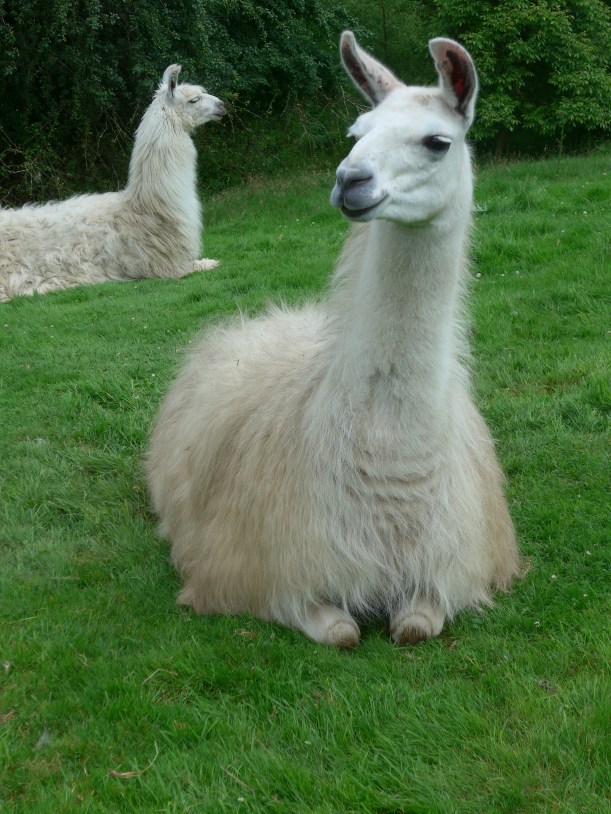
And so here is my Llama Juxtaposition – a photo taken recently in a field on a hill (hence the slant) near my home, not strictly the way to use this word but where I might just about get away with it.
 Diane Young Artist