Elusive. They are aren’t they. We are so lucky to have made effort to maintain pockets of populations of red squirrels in the UK. I saw my first on Brownsea Island in my 20’s. It wasn’t until 30 years later I saw red squirrels again, this time in Scotland.
This original design of mixed media artwork is a collagraph print (produced off a plate through a printing press), with 24 ct gold leaf and acrylic paints.
Total size framed 43 x 33 cm £255. Contact me on email diane@dianeyoungartist.com
Why do you put pictures on your walls, if you do? What might strike you as important in a picture? The obvious reason would be subject matter, maybe size for the space, the colours depicted, the colours of your room, what the image makes you feel, and other things that we cannot really put into words. You can justknow if a picture is right for you. They can just speakto you, if you know what I mean.
So why paint a scene like this?
At the time I was painting images of animals in mythology. My research led me to Korean Shaman imagery; I finally decided on the challenge of composing my own version of this traditional image from Korean culture.
The tiger’s size is exaggerated to convey it’s power and strength, the Shaman’s eyes are closed to display his trust in the tiger and how he feels at one with the world. You can almost feel the tigers warm breath on the Shaman’s toes! A trusting peaceful relationship with nature. Crane’s are often depicted in Asian art as they represent longevity, purity and peace. The mountain is of significance as a holy place. The Shaman shown in traditional images vary and are in fact a multicultural icon.
“Koreans still very strongly maintain traditions as old as their culture itself, that mountains are especially holy places of communication of energies between heaven and earth. The sacred aspects of these mountains and their relationships with the human communities around them are embodied in the ideas and icons of Sanshin [Mountain-spirit].”
Sometimes, or maybe even often, I produce pieces of work and dismiss them. I don’t mean to, I do not think hard about this at all, it just happens. These pieces surface at times, perhaps when an exhibition is about to begin and I start gathering things together.
My “Stepping Crane” is such a piece, having been exhibited at the Amberley Inn on our “Fish and Ships” PV night and I am pleased to say it is shortly on its’ way to a new home.
A sheep from the Trossach’s which does not actually belong to Penny but does wander around her garden and Cottage Holiday Let as it is open to the farmer’s field.
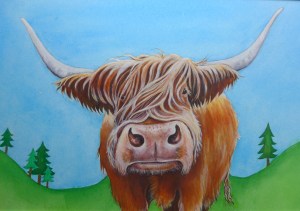
Having visited Scotland last year I have seen Highland Cattle in fields in their native country, yet my own photos of Highland Cows are taken very near my home in the Cotswolds where they roam free over hundreds of acres of natural land during the summer months.Sometimes they just stand on the road and the traffic have to wait for them to move. I love that these cows are extremely docile and have characterful & steadfast faces.
Nosey Highland Cow and Tonal Variation
A helpful way to review tonal variation in a painting is to take a black and white photo. If you are struggling with a painting and cannot quite figure out how to fix it a quick snapshot can point out problems in this area. My black and white photo here shows a good range of darks through to white. There was just a bit of light shadow to add to the face to finish.
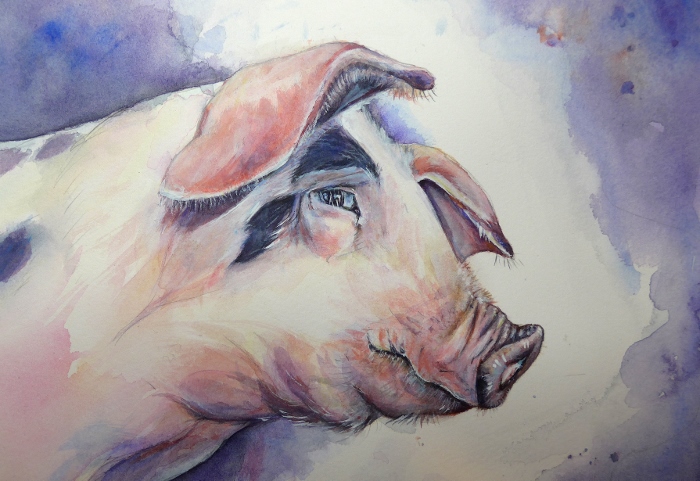
….thanks to Boondockers Farm in Oregon for permission to use their photo. These pigs were imported to the US during the 1900’s for breeding. “British folklore claims the large black spots are bruises caused by the apples falling onto them as they foraged the orchard floors for food.”








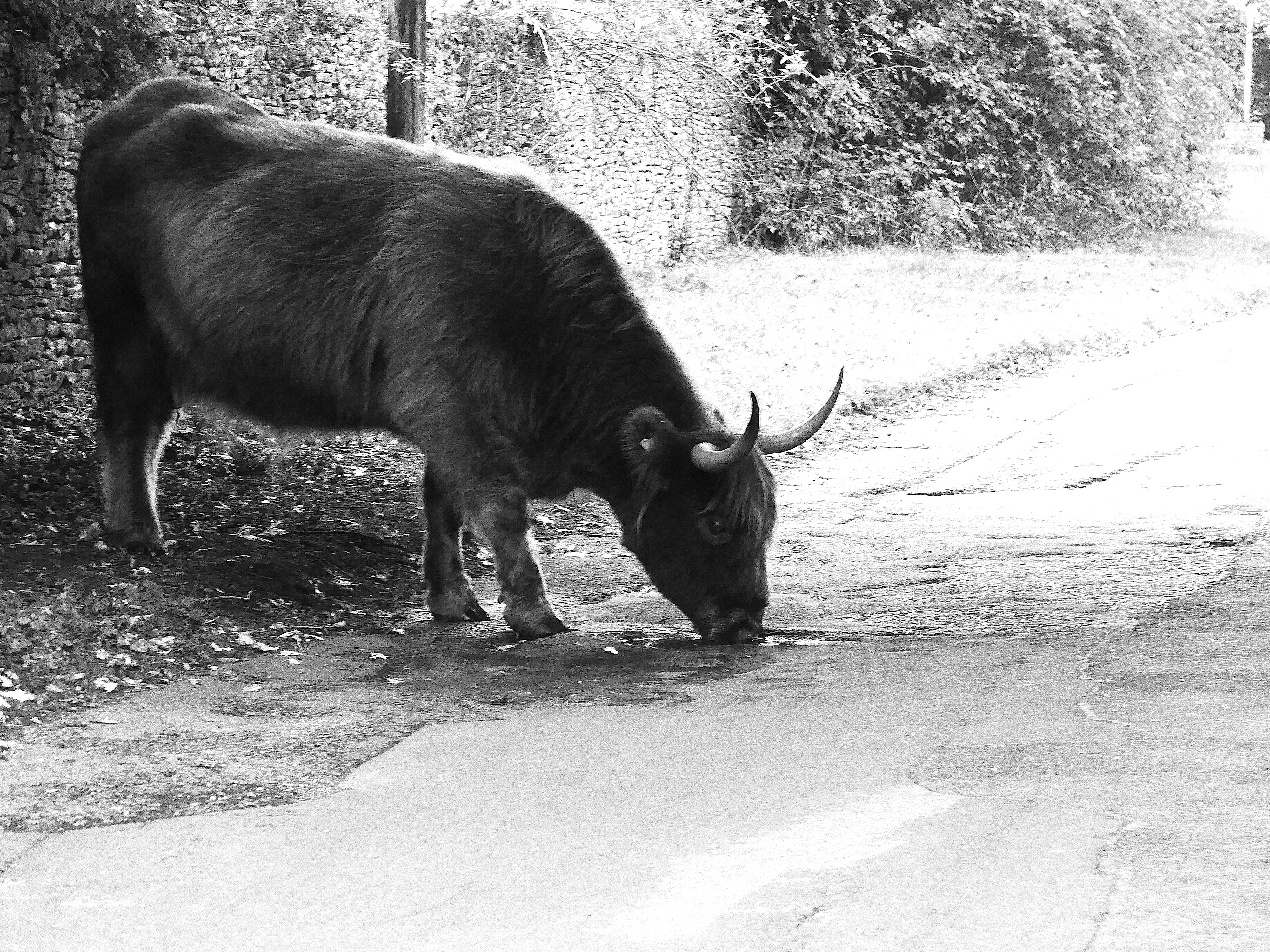 Sometimes they just stand on the road and the traffic have to wait for them to move. I love that these cows are extremely docile and have characterful & steadfast faces.

 ow to fix it a quick snapshot can point out problems in this area. My black and white photo here shows a good range of darks through to white. There was just a bit of light shadow to add to the face to finish.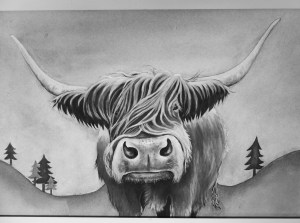
 Diane Young Artist